
AI is Taking Over- The Shocking Truth About Large Language Models
Stay updated with us
Sign up for our newsletter

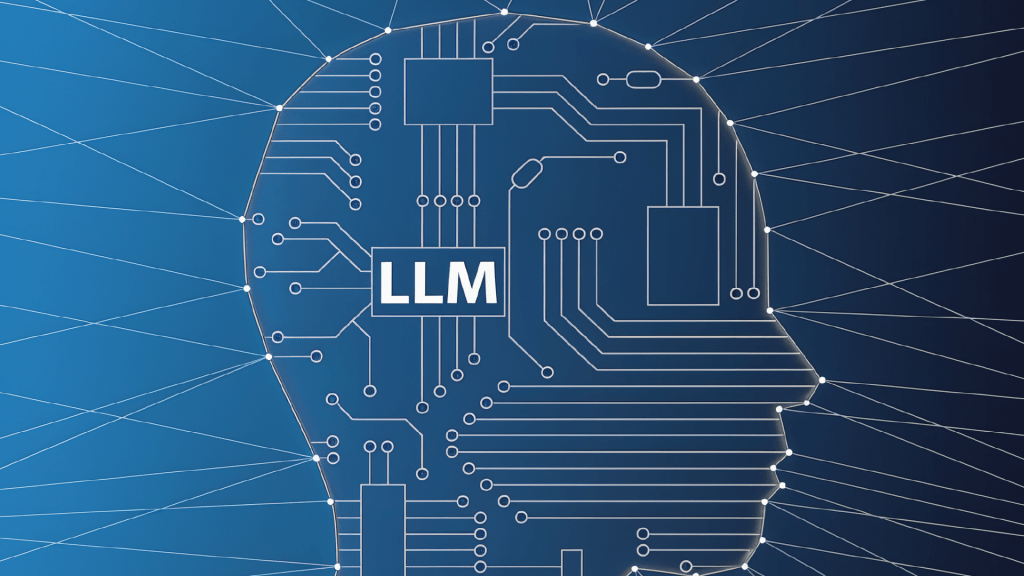
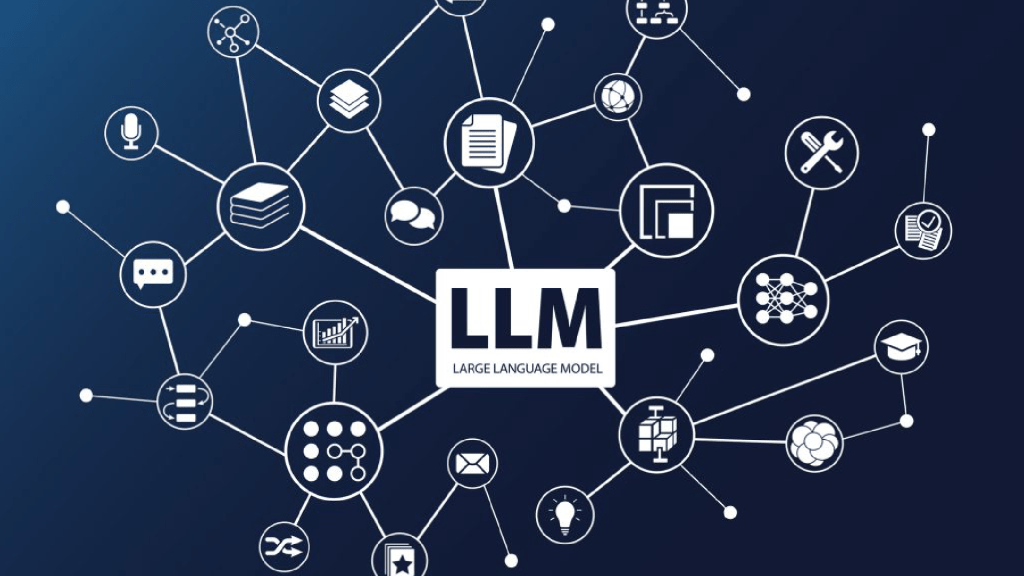
Language makes us human. Lately AI has advanced and pushed the boundaries of what machines can do with language. Large Language Models (LLMs) is a branch of artificial intelligence that studies a lot of data to understand and create human language. They are called ‘large’ for the very same reason that they process huge amounts of data. It focuses on recognizing and interpreting human language. These models are trained on millions and millions of gigabytes of data that is fed to them via prompts and they are fine tuned to understand, analyze them and then generate responses that are very similar to human language. LLMs are trained exhaustively to do hundreds of tasks. This has resulted in the creation of a model that successfully generates coherent responses with the help of a given prompt, and this makes them useful for applications in a number of ways.
How Do LLMs Work?
LLMs are machine learning based models on machine learning is a subdomain of AI that makes models through no-human supervision and the machine itself decides what to do based on the data it was fed. These are NLP models based on (machine) learning techniques. They learn and generate text using ineffable algorithms mathematical techniques. LLMs are trained on trillions of words of data scraped from the Internet from sources like Wikipedia and Common Crawl. They can learn grammar and nuances of the language, and how words correlate with each other, due to this training.
LLMs function by taking in an input, encoding and decoding them to create an output prediction. Transformer architectures pass text through layers, such as embedding, feedforward, recurrent and attention layers. Unlike the recurrence mechanism in RNNs, transformer models use attention to process entire sequences in parallel, which greatly reduces training time. LLMs can be fine-tuned after the pre-training for accomplishing specified tasks.

Transformer Architecture Component
Attention Mechanism
This enables the model to focus on the relevance of various words while creating a reply. For instance, in the sentence “The cat sat on the mat because it was tired”, the model learn from self-attention to associate “it” to “cat”.
Self-Attention
This allows a model to reference all other words in a sentence during its processing of each word, thus improving its comprehension of context.
Positional Encoding
Since Transformers do not process data sequentially they use positional encoding to give the model information about the order of words in a sequence.
Since Transformers don’t handle data in order, they need to employ positional encoding in order to provide the model with information about the phrases in a sequence.

Training Large Language Models
These elements combine to form a model that is able to comprehend and produce human speech effortlessly.
Data Collection
The first stage is collection of different sets of text from different platforms in such a manner that the model will get different styles and contexts to work with.
Pre-processing
The data is then preprocessed which entails tokenization – cutting texts into small parts – normalizing, and filtering out irrelevant material.
Training
The model is subjected to supervised learning where it is taught to guess a missing word from the preceding words in a sentence. This is done by adjusting a few billion parameters using backpropagation to reduce the prediction error.
Fine-Tuning
After the models have been trained on general data, they can then be fine-tuned to work on specialized tasks such as medical or legal vocabularies to increase efficacy in those areas.
Evaluation
Lastly the models are evaluated with metrics such as perplexity and BLEU scores.
Key Drivers of Growth
Growing Adoption of AI
More organizations are acknowledging the potential advantages of AI and machine learning in boosting efficiency and productivity.
High Automation
Companies are seeking ways to automate repetitive tasks, such as handling customer support inquiries and generating content, which is driving interest in LLM applications.
Natural Language Processing
Ongoing advancements in NLP technologies have enhanced the effectiveness of LLMs in grasping the nuances of human language.
Data Availability
As data generation continues to increase daily, organizations get access to a lot of information that is then used to effectively train large language models.

Key Applications of LLMs
Customer Support
Most companies are implementing LLM-based chatbots for an upgraded service so that it can be made available on their end. They can process many questions at a time, deliver answers right in the nick of time and that alone does wonders for customer satisfaction. A recent survey showed that businesses utilizing AI chatbots delivered satisfaction scores as high as 30% higher on their services.
Content Creation
LLMs are changing the game and bring automation to writing — be it blog posts, social media updates and generating other kinds of content. For example, LLM tech is used by Jasper.ai where you can craft awesome content quick and smart for marketers.
Translation of language
The LLMs have crossed over the threshold that they were just breaking down language barriers with their amazing sentence translation features. They are able to translate texts between languages with the same context as traditional translation, beating which the traditional methods are not so good at. Depending on data available from Statista, in 2020, machine translation market was valued at approximately $550 million which will be over $1 billion by 2025 with major contributions from advancements powered by LLMs.
Data Analysis
LLMs are being increasingly sought by business for their data analytics functionalities ranging from sentiment analysis and categorizing trends in huge datasets. Companies such as Tableau are starting to embed the AI capabilities that leverage LLMs, enabling a more human interaction with data and allow for real-time insights.
Better Personalization
An interesting use case of LLMs is Personalization Services— the traction gathered in understanding user interactions and preferences to create customized experiences. LLMs can be combined with response or suggestion personalized to users. With their refined NLP, streaming services use recommendation algorithms to observe user behavior patterns supported by LLMs.

Sustainability Concerns
LLMs with all their benefits, also bring concerns for sustainability and concerns. Training large models demands a lot of computational resources, and researchers have to examine the consequences of these things on the environment. A study published in Nature estimated that training just one large transformer model could produce over 626,000 pounds of carbon emissions. Their environmental footprint has made debates spark about sustainable AI practices. Techniques like model distillation should be used. In this model, smaller versions of large models are created and their performance capabilities are maintained. Researchers are finding methods like mixed precision training or cutting down on unnecessary parameters after training to reduce resource usage. Carbon Offsetting Initiatives can be implemented. Some organizations are participating in carbon offset programs as part of their dedication to sustainability in AI technology deployment.
Advancement
Deepfake technology is constantly getting better, many times using the research to detect them to make it better, making it difficult for detection methods to keep up.
Ethical Considerations
Bias in AI
Like any powerful technology, LLMs also have their own ethical implications. Existence of bias in AI systems is a real problem and the reason for that is biased training data. Bias in AI output is a primary concern stemming from biased training data. Studies have indicated that if an LLM is trained on biased textual sources such as those with stereotypes it may generate biased outputs. Research indicates that when a large language model (LLM) learns from texts that exhibit biases such as stereotypes it may generate biased results. One latest example of such bias is he latest AI model Deepseek that doesn’t respond to any political question based on China, its country of origin.
This raises crucial discussions regarding accountability and fairness. The following points are some solutions that can be incorporated to decrease AI and transparency biases:
1. Diverse Training Datasets: Incorporating a variety of viewpoints in training datasets can help reduce bias. These training sets can help the AI models to have different view points on a topic and be able to provide unbiased responses.
2. Regular Audits: Conducting routine evaluations and audits of AI outputs find biases early and can reduce chances of biased and wrong outputs.
3. Transparency: Improving understanding of how models are developed can increase user confidence in AI-generated content.
Data Privacy Issues
As companies utilize LLMs to manage user data for customized experiences, compliance with regulations like GDPR becomes essential. AI language models like ChatGPT’s constantly face the challenge of privacy, where the data is one of the major issues. In training, these models can accidentally feed sensitive information causing data leakage which would in turn could become privacy breaches. Without strong controls, wrong individuals could take advantage of LLMs to get confidential information through unauthorized access. Compliance is also difficult as mishandling of personal data can lead to regulatory violations such as GDPR, which can incur heavy fines and damage the organization’s reputation. Organizations need to protect user privacy while effectively leveraging these powerful technologies.

The Future of LLMs
As we look toward the future of Large Language Models, several intriguing trends emerge. LLMs can be integrated with other technologies to enhance AI models. As businesses aim for smooth operations, integrating LLMs with existing systems is crucial. For example, merging LLM capabilities with voice recognition technology could lead to more sophisticated virtual assistants that understand context far better than before.
It can also be helpful in the advancement of personalization. A better grasp of user intent could facilitate even more customized interactions across various platforms which can be practiced either through personalized news feeds or tailored experiences based on browsing patterns. LLMs are a boon for improved text summarization amid the information overload at present. Future enhancements in LLMs could focus on summarization strategies that summarize lengthy articles into concise overviews while retaining essential information making it easier for users. What we understand by all these points is that LLMs will be a significant part of how we interact with technology and make our experiences more personalized. LLMs could become an important tool for businesses and consumers due to their ability to understand and condense information. Developing LLMs to their full potential will become increasingly important as time passes.
If you liked the blog explore this: Deepfake Apocalypse: Facing a World Where Reality Is Blurred!