
The Rise of AR and VR in IT: Bridging the Gap Between Reality and Innovation
Stay updated with us
Sign up for our newsletter
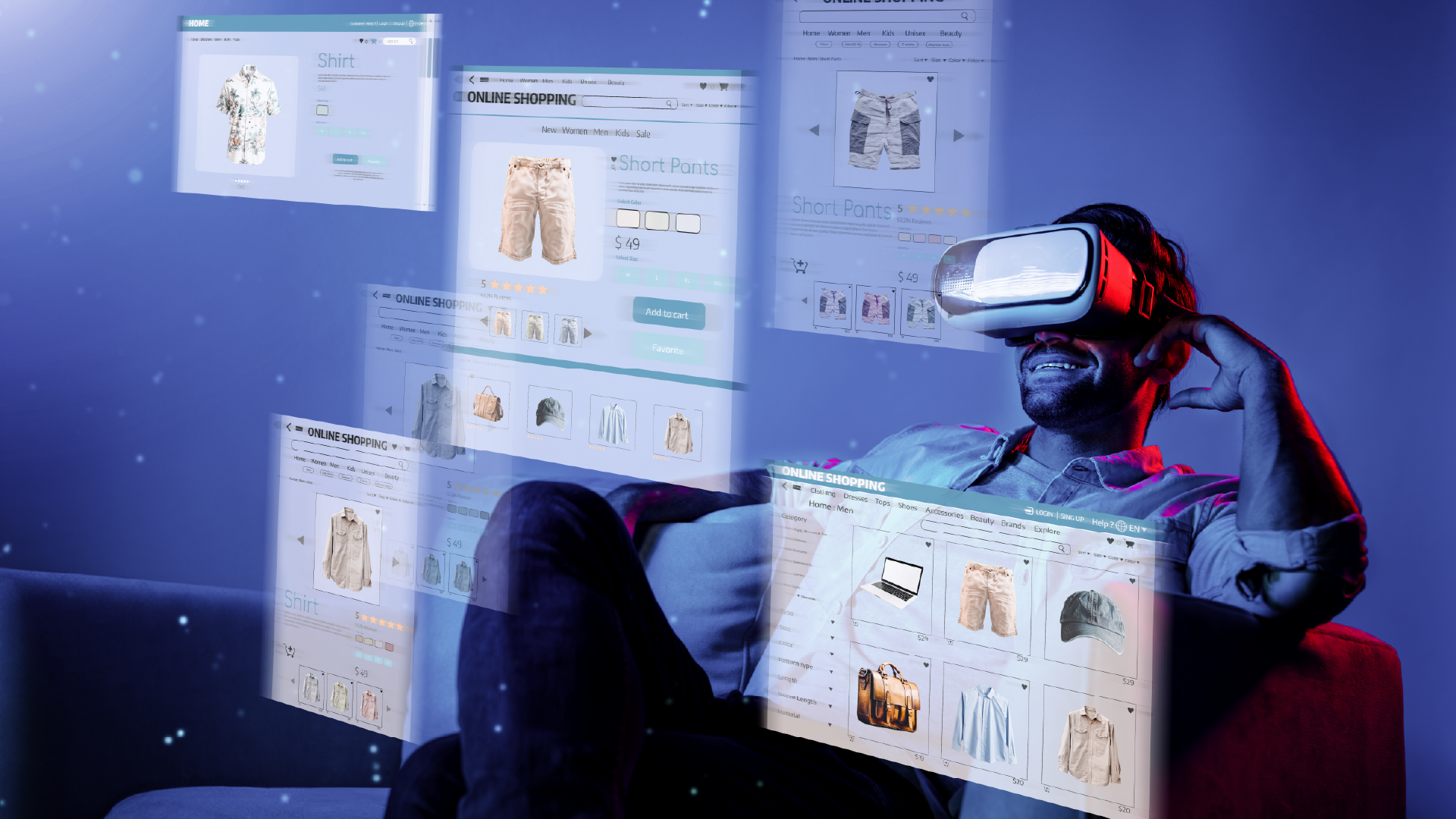
The IT industry goes hand in hand with innovation. Technologies like Artificial Intelligence (AI), cloud computing, and big data have revamped the face of businesses and their operations. But a new wave is emerging: Augmented Reality (AR) and Virtual Reality (VR). These technologies, once associated only with gaming and entertainment like Xbox virtual reality experiences—are now becoming crucial tools in IT and B2B ecosystems.
A New Frontier in IT
As put articulately by Sudipto Ghosh, “Artificial Intelligence is not a man versus machine saga; it’s, in fact, man with machine synergy”. AR and VR are transforming the IT sector by bridging the gap between physical and digital realities. Augmented Reality overlays digital information on the real world, enhancing what users see. Virtual Reality creates immersive, computer-generated environments, allowing users to interact with a simulated reality.
Understanding how augmented reality works is essential to grasp its potential. It overlays digital information on the real world, enhancing what users see. Similarly, to comprehend how virtual reality works, one must dive into its ability to create immersive, computer-generated environments, allowing users to interact with a simulated reality.
The global market for AR and VR is growing rapidly. According to a report by MarketsandMarkets, it is projected to reach $96 billion by 2029 at a CAGR of 34.2%, a significant rise from $30.7 billion in 2021. This growth is changing the AR and VR sphere by transforming object recognition, virtual assistants, spatial mapping, user interaction and more sparking debates on VR vs. AR applications across industries.
Enhancing IT Processes
In IT, AR and VR are changing how companies approach design, training, and operations. Let’s break it down:
1. Streamlining Training and Development
IT roles often require specialized skills. Augmented reality training, paired with VR solutions provide an innovative way to train employees. For instance, using VR headsets, companies can simulate difficult scenarios which allow employees to practice in a risk-free environment. A PwC report shows that VR-based training can improve retention rates by 75%, compared to 10% with traditional methods. The same study also showed that such employees have 4 times more focus than untrained employees.
2. Boosting Remote Collaboration
As hybrid models increase, IT teams require effective collaboration. AR and VR provide immersive environments for virtual meetings, design reviews, etc. Microsoft’s Mesh for Teams is a great example. It combines AR and VR to create “holoportation,” enabling users to appear as photorealistic holograms in virtual spaces. This not only enhances engagement but also reduces miscommunication.
3. Optimizing IT Support and Maintenance
AR is revolutionizing technical support. By using AR glasses, technicians can visualize problems in real time. This reduces downtime and ensures faster resolution. For example, Siemens uses AR to guide its technicians during equipment repairs. The result is a visible reduction in maintenance time and significant cost savings.
Applications: AR & VR in B2B IT
1. Prototyping and Testing
A recent survey by Accenture done across North America, Europe and Asia Pacific called Try it. Trust it. Buy it., found that 64% of leading brands are investing in augmented reality, virtual reality and 3D content. AR and VR allow IT teams to test new products in virtual environments. This accelerates the development cycle and reduces costs. Companies can reduce product prototyping cost by 40-65% using VR. By visualizing designs in 3D, teams can identify flaws early, avoiding expensive revisions later.
2. Sales Enablement
AR and VR are becoming essential for B2B sales. Imagine a software company using AR to demonstrate its product’s features interactively. Customers can visualize how the solution integrates into their systems, boosting confidence and speeding up decision-making. The abovementioned survey by Accenture also reports that 53% of B2B buyers are more likely to purchase after experiencing a product through AR or VR that suit their needs.
3. Enhanced Security Simulations
Cybersecurity is a top priority for IT firms. VR enables immersive simulations of cyberattacks, helping teams prepare for potential threats. These realistic training sessions improve readiness and reduce the risk of breaches. Technologies like Tracking systems, interactivity elements, artistic inclinations and sensory management systems can critically evolve cybersecurity.
Challenges to Overcome
While AR and VR present immense potential, they come with challenges:
- High Initial Costs
AR and VR technologies require significant investment. For smaller IT firms, the cost of hardware, software, and skilled talent can be prohibitive. - Technical Barriers
AR and VR demand robust infrastructure. Latency, low bandwidth, and hardware limitations can hinder adoption. - User Adaptability
Not everyone is comfortable with immersive technology. Companies need to prioritize user training and gradual integration.
Despite these challenges, the long-term benefits of AR and VR often outweigh the problems. Tim Cook, CEO of Apple, called AR “a profound technology that will transform everything.” Similarly, Microsoft is heavily investing in AR and VR solutions for enterprise clients. This highlights a growing consensus: AR and VR aren’t just a passing fad; they’re the future. Additionally, the growth of augmented reality applications in business sectors like healthcare, real estate, and manufacturing highlights how industries leverage their transformative potential. From augmented reality programming advancements to operational efficiency boosts, its use cases are broadening every day.
Conclusion: The Road Ahead
AR and VR are revolutionizing IT by bridging the gap between reality and innovation. From training employees to prototyping products and enhancing cybersecurity, the applications are limitless. As these technologies mature, IT companies that embrace them early will gain a competitive edge.
The rise of AR and VR is more than a trend—it’s a transformation. The time to act is now. The integration of AR and VR into IT will continue to evolve. Emerging trends include 5G connectivity that will enable faster internet, AI integration for more interactive experiences and cross-industry collaboration with industries like healthcare and manufacturing. The future will be defined by immersive technologies that make IT systems more intuitive, efficient, and innovative.
Explore Our Blog: Beyond Text: How Large Language Models Are Scaling Businesses to New Heights


