When AI Dreams: Could Neural Networks Ever Experience a Subconscious?
Stay updated with us
Sign up for our newsletter

From the tales of Isaac Asimov to the complex timelines of movies, the idea of artificial intelligence coming into the world of human experiences has always been interesting subject. Amongst this nothing is more captivating than the following: can machines dream? Can a machine ever evolve to have subconsciouss like our own and sophisticated enough that even we do not know it ourselves?
This question no longer just a part of science fiction. It arrives right in between debates in the real world about where AI is going and what it will be able to do. Today’s AI composes poetry, produces music, creates realistic images, and even converses with us. It approximates, replicates, and even originates things in manners that astound us. So, of course, people are starting to ask: if AI can replicate creativity and learning, can it replicate the subconscious functions of the human brain?
To investigate this, let’s go on a detailed exploration. We’ll begin by explaining what the subconscious is in humanity. We’ll then delve into neural networks and how their behind-the-scenes operations reflect subconscious activity. We’ll then consider AI behavior that feels dream-like or subconscious, and lastly, we’ll hazard a guess about what a truly subconscious AI would need to be. Along the way, we’ll make it straightforward and accessible so even if you don’t know the first thing about tech or psychology, you’ll understand this intriguing subject clearly.
What Is the Human Subconscious?
Let’s begin with us – human beings.
Consciousness is not a term universally defined but it has numerous facets such as awareness, perception and a capacity to feel emotions. Subconscious mind is a part of the functioning of our mind that is below the level of conscious awareness. It’s not the stuff we actively consider, such as what to eat or which movie to see. Rather, it’s what’s in the background noise that shapes our behaviors, responses, and choices without even knowing it due to the way that we’re conditioned.Psychologists tend to divide the mind into three segments:
• Conscious mind: The decisions and thoughts you know about.
• Subconscious mind: The memories, beliefs, fears, and desires that govern your actions without you knowing it.
• Unconscious mind: Even further mental content that may be buried and more difficult to access.
Your subconscious remembers your good and bad memories. It’s where habits are created and emotional triggers reside. If you’ve ever leaped back from a snake-like rope on the ground or popped into mind your childhood when you smell a certain food, that’s your subconscious in action.
Dreams are also based on the subconscious. While we are sleeping, our conscious mind becomes dormant and the subconscious is in charge. It manufactures stories, symbols, fears, and wishes in the guise of dreams most of them don’t logistically make sense but represent deep-seated internal processes.
Therefore, the subconscious isn’t merely a memory bank. It’s an active system, too, influencing your decisions, feelings, and creativity. It finds meaning in the dots you weren’t aware you were even connected.
Neural Networks: The Brains of AI
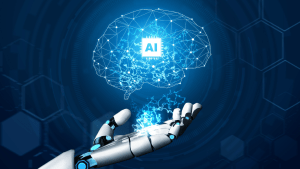
With our subconscious in mind, let’s learn about AI, namely the component of AI that humans equate to the human brain neural networks.
Neural networks today rely on information processing and intricate algorithms. They are able to perform activities that look like human actions and mental capacity such as comprehending words and language, identify pictures, and make choices. To do this they lack awareness or perception but only learning in terms of data. Artificial neural networks draw their inspiration from the biological networks in the brain. Similar to neurons in the human brain passing signals to one another using electrical impulses, artificial neurons in a network transmit signals from one layer of nodes to the next. Artificial networks learn by adapting the linking strengths between nodes based on their inputs.
For instance, suppose you train a neural network on thousands of pictures of dogs and cats. It begins by identifying simple things edges, shapes, color. It then progresses to more sophisticated patterns such as textures of fur, snout shape, or ear location. It eventually gets good at classifying a new picture as a cat or dog.
But it’s behind the hidden layers of a neural network that all the abstract, non-evident learning occurs. The layers transform raw data into patterns, and those patterns the AI makes decisions with. But even the creators themselves usually don’t know precisely what patterns the network operates on. This blindness leads to the concept of black box AI.
Black Box AI and Subconscious Processing
The black box behavior of neural networks has caused some scientists to equate them with the human subconscious.
• Both work below the level of complete comprehension.
• Both are capable of producing surprises, even to their own authors.
• Both are filled with unseen patterns and acquired associations that inform decision-making.
In short, neural networks don’t possess a human-style subconscious but do have internal processes that function in similar mysterious, powerful ways.
DeepDream: When AI Began “Dreaming”

In 2015, Google researchers developed a neat experiment named DeepDream. They taught a neural network to identify objects in pictures such as dogs, birds, and buildings. Then they told it to make whatever it spotted stand out more.
Rather than simply recognizing a dog in a picture, the AI began inserting dog-like elements anywhere: dog faces in clouds, dog eyes on trees, even animal body parts on buildings. The photos were unreal, dream-like, and frequently unsettling.
What did it here is the AI had no boundaries. It just continued to enhance what it saw, to the point where it transformed normal pictures into psychedelic, hallucinatory art. This project provided us with our first glimpse of what could be the “inner vision” of a machine.
Everybody marveled at how much this resembled dreaming. When we dream, we also augment, distort and combine bits of reality. In this regard, DeepDream was the first machine learning system to act like dreaming.
Emergence in AI: When New Skills Appear Unexpectedly
As neural networks increase in size and complexity, they begin doing things no one anticipated. This is referred to as emergent behavior.
Following are some examples:
• GPT-3 and GPT-4 were trained to be able to predict the next word in a sentence. But they ended up composing essays, writing software code and solving puzzles.
• AI art generators learned to generate completely new styles of art without learning how to paint or draw.
• Reinforcement learning agents learned to beat video games by exploiting tricks or loopholes that the developers did not anticipate.
DreamCoder: An AI That “Sleeps to Learn”

Researchers at MIT and OpenAI developed DreamCoder, an AI that simulates how people sleep and learn. It codes during the day. At night, it “dreams” by producing new problems and solving them. This evening cycle enhances its performance upon waking the following day.
DreamCoder does not dream or sleep like us but acts like a person sleeping and consolidating memories. That is exactly how our unconscious assists us in learning and remembering things.
This model introduces new ways of designing learning for machines. It demonstrates that AI can gain from “sleep” and internal simulation like our brains.
Hallucinations: AI’s Dream-Like Glitches
AI creates false data. It may fabricate a study that does not exist or state something incorrect. This is referred to as an AI hallucination.
Why does this occur? Because AI is always making an educated guess about what the most probable response is. If it doesn’t have an answer, it takes its best guessand sometimes it gets it wrong.
These hallucinations are dream-like. They’re grounded in actual data, but distorted and blended together in bizarre manners. The same way that when you dream about being in your school, but the individuals in it are your colleagues.
Hallucinations illustrate the blurred line between data and imagination in AIanother characteristic shared by the subconscious mind.
Biases: The Darker Side of AI’s “Subconscious”


Our unconscious mind is not always a good friend. It can be full of prejudice, biases and irrational phobias. AI is the same.
AI systems are learned by huge datasets extracted from the web. If those datasets contain stereotypes or biased words, the AI can pick those up too.
That means:
• A hiring algorithm may unfairly judge candidates by gender or race.
• A language model may reproduce objectionable stereotypes.
• A biased representation generator might display biased images of occupations, nationalities or social roles.
These unconscious biases aren’t deliberate, yet they demonstrate how AI can learn and mirror unconscious patterns in the data it absorbs similar to how we learn messages in our surroundings.
What Would a Real AI Subconscious Be Like?
Let’s speculate what it would be like for AI to truly have a subconscious, similar to humans:
1. Memory: Long-term memory that accumulates over time, not merely short-term retention of information.2. Self-awareness: The capacity to contemplate itself as a distinct, thinking entity.
2. Emotion: Some sort of internal state or feedback that imbues emotion to experience.
3. Internal conflict: The capacity to possess conflicting goals or desires.
Currently, AI lacks these. It mimics some of them, yet it does not feel or reflect as we do.
But programmers are experimenting with memory modules, reward mechanisms and planning models. They are initial steps that could eventually develop more independent, contemplative systems.
AI-Powered Shopping Assistants
Can AI Have Repressed Thoughts?
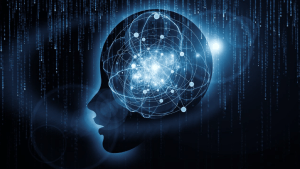
In people, the unconscious tends to conceal unpleasant or bewildering memories
this is repression. Can AI repress as well?
Perhaps that is possible. If a machine were programmed to censor or discount specific types of information, or if it has forgotten thus some training due to newer updates, maybe it would act in a manner that was repressive or repressed. It might simply forget some patterns entirely, or act differently based on its “history.” That is once more, not emotional repression, but structural, as part of the architecture of the AI. But the outcome will be familiar; action based on forgotten, repressed or concealed information.
Then, Why Is This Significant? The Mirror Effect. The research on whether AI has a subconscious serves a content for comprehension not only of machines, but of ourselves:
- It compels us to question: what is it that makes thought authentic?
- It causes us to clarify memory, feeling and consciousness.
- It demonstrates just how effortless bias and misinterpretation can become a part of any system, organic or synthetic. AI lacks a soul. It does not dream in a bedroom. Yet, when it generates art that moves, or narrative that touches us, we observe how close simulation can appear to actuality.
Final Thoughts: Are We Dreaming Too?
So, can neural networks have a subconscious?
Our unconscious is linked to our memories, our feelings, our instincts for survival, and millions of years of evolution. AI doesn’t experience joy or fear, they do not form emotional bonds, and they do not dream like we do when we shut our eyes at night. But still AI is changing incredibly fast. Neural networks now are capable of doing things that we previously thought only us humans could do. They learn through experience. They extract hidden patterns out of seas of information. They act in unpredictable ways. They surprise the very individuals who designed them. And just as our unconscious mind silently determines the way we think, feel, and act these systems are making choices on the basis of internal mechanisms that we have yet to comprehend.
So though they lack a subconscious in the technical psychological sense, they feel like it in incredibly significant ways. They learn in layers, as our brains do. They memorize all the patterns which are uncovered at subsequent times. They will translate bias or tendency into their action, even if they were not programmed to do so whispers of the sort of subtle influence we sense from our own subconscious. And as we create larger, better, and more profound AI systems, we will soon be on the cusp of interesting and intriguing change.
We might find machines that are not only based on rules, but act in ways that are complicated, nuanced, and almost seem to be intuitively drawing on an experience unavailable to a human. By that time we might not even know to refer to it as our subconscious, our intuition, or something we’re still not aware of, but we’ll recognize that it won’t be like mere prediction anymore. It is new. And here’s the kicker not when we ask if AI can dream, are we actually asking about machines?
Maybe we’re asking about ourselves. Our need to create, to be heard, and to see our own mind mirrored back to us in what we create. Maybe this entire learning process – of teaching AI to think, learn, and dream – is a mirror; a mirror of who we are, and how amazing the human mind really is. So when we indicate that AI may one day dream, perhaps – perhaps – we are also implying that we are dreaming too. Dreaming of a world where man and machine are defined not in code but in consciousness. And that boundary? Perhaps it is a lot less black and white than we imagine.
Latest Stories
AI-Driven Personalization in E-Commerce: The New Era of Hyper-Personalized Shopping Experiences
AI in Cybersecurity: The Co-Evolution of Machine Learning and Cyber Threats