
OpenAI’s ‘Deep Research’ Could Kill Google—But Can It Be Trusted?
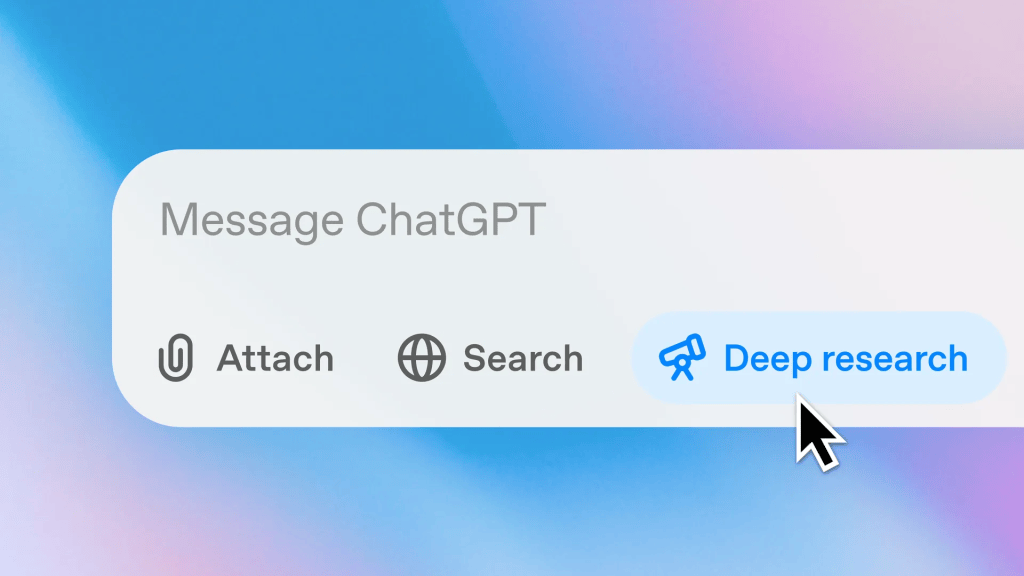
CALIFORNIA, USA, 3rd February 2025 – OpenAI has just launched “Deep Research“, an AI tool of great potential that spells the end for online information retrieval and analysis as we know it. While conventional search engines provide quick answers, this AI agent goes deeper by scanning, interpreting, and synthesizing data from different sources to produce highly detailed reports. A brainchild!
But, there is a million-dollar question: Is AI finally a replacement for human research or is this just another overhyped tech gimmick?
Instead of having to search page by page, Deep Research takes care of all the research process. Users input a query – be it related to stock investments, business strategies, or which car to buy – and the AI collects the information, cross-checks the sources, and compiles a well-documented report.
For now, the feature, Deep Research, is only for ChatGPT Pro users and is restricted to only 100 queries per month. OpenAI said it plans to increase access to Plus, Team, and Enterprise users as well.
AI vs. Google
Google Search has been the go-to tool for research for decades. But OpenAI claims its AI agent offers something different—it doesn’t just pull up search results, it analyzes them for you. Instead of clicking through articles and comparing data yourself, Deep Research does the heavy lifting.
But AI is not infallible. OpenAI says that Deep Research can still go wrong, misunderstand sources, or present reports incorrectly. And don’t forget the biggest flaw of AI: hallucinations, in which it is sure to present false information.
Who Is It For?
OpenAI is selling Deep Research to professionals in finance, science, policy, and engineering—who need precise, in-depth research but also want someone to do that legwork for them. But the tool could be useful for everyday users who make significant purchases, such as a car or home appliance.
For business owners, it will save hours of manual research. To research marketing trends for 2025, one would have to read multiple reports. Deep Research puts all that information into one structural document with citations.
Currently, Deep Research is text-only, but OpenAI will add images, charts, and data visualizations soon. The AI also connects to subscription-based and private databases, making it super powerful.
So, will Deep Research replace Google? Not yet. But if OpenAI can fix its accuracy problems, this will be a big game changer for research-intensive professions. The real question is—will people trust AI-generated reports, or will they still check facts themselves?
Read Latest Stories:
The AI War Heats Up! Kimi k1.5 To Crush OpenAI’s GPT-4o?
Encryption Nightmare? IBM & Telefónica Brace for the Quantum Cyber Apocalypse!
Apple’s Q1 Revenue Hits Record $124.3 Billion Amid AI Expansion!