
Paradromics Tests Brain Implant in Human Successfully
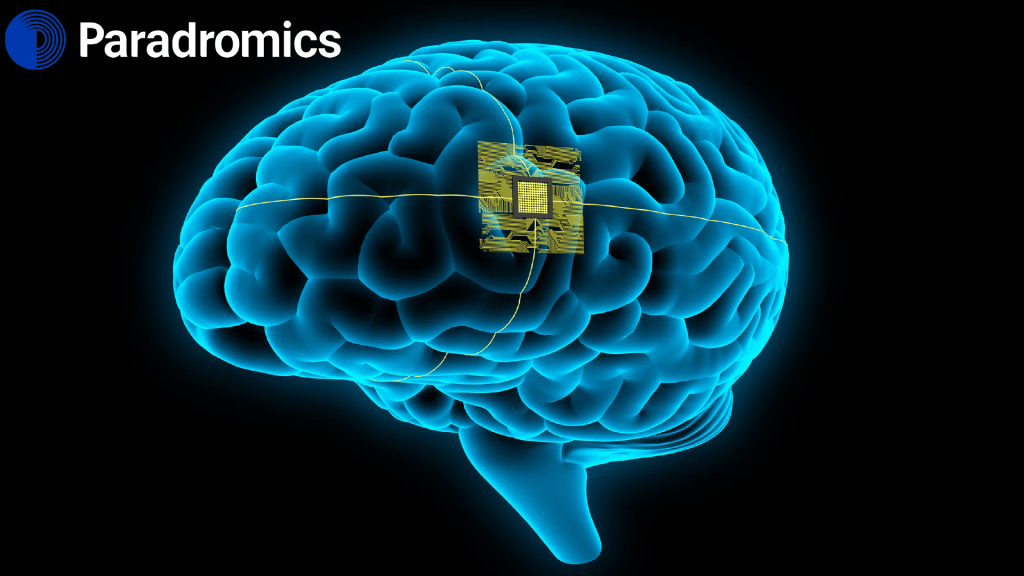
A brain-computer startup called Paradromics has successfully tested its brain implant, named Connexus, in humans for the first time. The trial took place on May 14 during a routine brain surgery at the University of Michigan. The patient, who was already undergoing surgery for treatment of their epilepsy, allowed surgeons to implant the device in their brain for a limited amount of time (10 minutes).
Ultimately, the device was removed safely. While a short test, this is a step forward towards more prolonged studies. Connexus is being developed for use in patients who are incapable of speech or movement due to injuries or disease, like spinal cord injury,
stroke, or ALS. The goal is for the device to create words, text, or computer cursor movements from brain signals.
Connexus is quite small (smaller than a dime) and contains 420 ultra-fine needles that are able to pick up activity from the brain. It was inserted into the patient’s brain using a tool similar to an EpiPen. The test was successful in reading the brain’s signals. Paradromics has been testing the implant on animals such as sheep for the last few years, but this was their first time testing in a human.
CEO Matt Angle said that,
“Doing this kind of study during a planned surgery is low-risk and provides good information for researchers. There are other companies working on brain-computer devices, including Elon Musk’s Neuralink as well as a number of startups such as Precision Neuroscience and Synchron. Some consumers obtain devices using less invasive methodologies, including placing the device on the surface of the brain or in a nearby blood vessel.”
Connexus obtains their signals by placing the device very close (but not actually measuring) where signals travel (i.e., neurons). Obtaining these signals provides signal quality that is helpful in decoding speech. These devices don’t read your thoughts. They read movement signals from your brain. So for example, someone who cannot talk is still trying to move their mouth, so the brain sends signals. The implant would pick these signals up and translate them into speech.
Paradromics hopes to do long-term human trials later this year. If that goes well, people with paralysis may be able to utilize this technology of communication in the future. It is a big step towards people for communicating again not with their voice, but with their brain.
____________________________________________________________________________________________________
Latest Stories
https://fintech-pulse.com/news/kyndryl-ai-people-readiness-report-2025/
https://fintech-pulse.com/news/microsoft-malaysia-west-cloud-region-ai-launch/
https://fintech-pulse.com/news/microsoft-yotta-ai-partnership-india/