AI In Fintech Use Cases: How AI is Transforming FinTech In The US
Stay updated with us
Sign up for our newsletter
AI In Fintech Use Cases: Big Changes in the US Money World
AI in fintech use cases is changing the way we think about money. My friends and I were trying to buy tickets for a music festival online. The tickets were selling out fast so my older brother let me use his debit card to pay. I typed in the numbers, clicked buy and suddenly the screen froze and said the card was declined. We were really worried. Then just two seconds later my brother’s phone buzzed. His bank sent a text asking if he was trying to spend two hundred dollars on concert tickets. He texted back “yes “. The payment went straight through. That was my time seeing AI in fintech use cases in real life. It was amazing that a computer knew that my brother never buys expensive tickets and jumped in to protect his money.
Back in the day people had to go to a physical bank building, stand in a line and talk to a human just to move their own money around. Now everything is on an app on our phones. If we really want to understand how things are changing fast we have to look at AI in fintech use cases. Fintech is a short word for financial technology. When you mix that with computers you get a whole new way of dealing with money.
What Are The Main AIs in Fintech Use Cases?
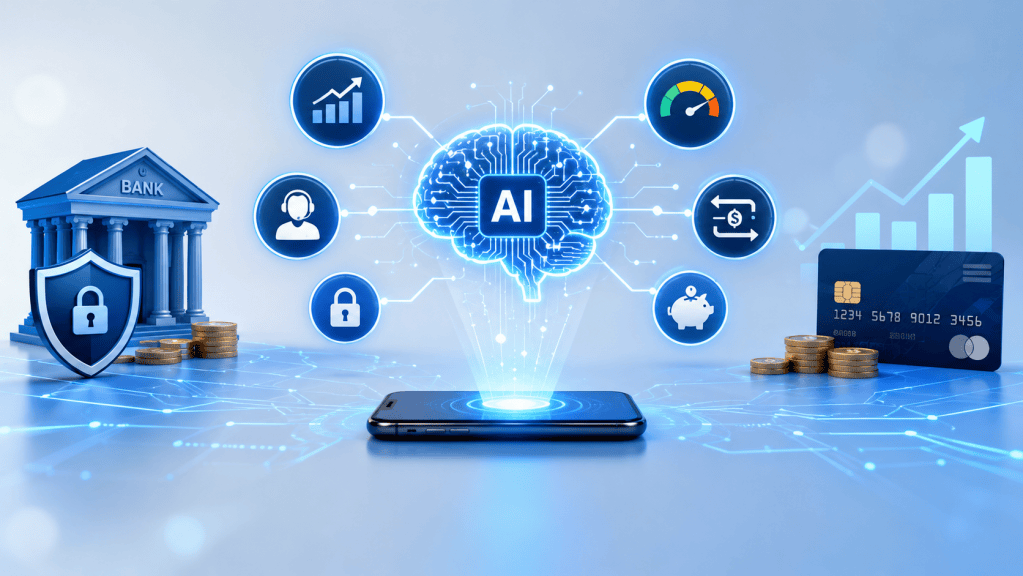
When we talk about AI in fintech use cases we are basically talking about the specific jobs that computers are doing for banks and money apps. One of the parts of this is machine learning in fintech. Machine learning is not as complicated as it sounds. It just means that the computer gets smarter the more it practices. Imagine if you were playing a video game and every time you lost you instantly learned how to never make that mistake again. That is what machine learning in fintech does with money data.
Of humans doing all the boring math and checking every single transaction the computers learn from what we buy and how we save. Over time they get really good at guessing what we need. According to a report over 80% of firms are now using AI and machine learning to predict what their customers want. That is an amount of companies relying on computers to do the heavy lifting. We see AI in fintech use cases popping up everywhere from the apps we use to track our allowance to the computer systems that run Wall Street.
Looking At AI in Banking Examples
To make this easier to understand let us start by looking at some normal AI in banking examples that you have probably seen yourself. Have you ever gone onto a bank website because you lost your debit card and a little chat box pops up in the corner asking if you need help? That is not a person typing to you. That is a chatbot powered by computers. Customer service bots are some of the common AI in banking examples today. A study by Gartner in 2029 showed that chatbots will soon handle 85% of all customer service chats without a human ever getting involved. Despite this report, presently 96% of global CX and contact center leaders believe AI implementation (of both generative and agentic AI) to be the key to their strategies, organizations still struggled to keep up with responsible‑AI practices even as they scaled AI for personalization and self‑service.
Another important thing is fraud detection. This is one of my AI in fintech use cases because it acts like a digital security guard. If someone steals your credit card information and tries to buy a bunch of gaming consoles in a completely different state the computer notices right away. The computer knows that you usually only buy snacks and video games in your hometown. Because the new purchase looks weird the computer instantly blocks the card. Send you a text message to warn you. According to Business Insider, these smart security systems are going to save banks around 447 billion dollars to firms.
How Fintech Automation Tools Help Us Skip The Boring Stuff?
Nobody likes doing repetitive paperwork. That is why fintech automation tools exist. These tools are basically software programs that do repetitive work so humans do not have to. Think about trying to open a brand new bank account. A time ago you had to fill out stacks of paper, show your ID to a manager and wait days for them to approve you. Now you can just download an app to take a picture of your face and your ID and the fintech automation tools verify who you are in five minutes.
These tools check the watermarks on your ID. Match your selfie to the photo instantly. It is so fast and simple. This is one of those AI in fintech use cases that actually makes life way easier for everyday people. A report by McKinsey & Company in 2022 says that automation can actually do 30% of the boring work that bank employees used to do. This means the human workers can focus on helping people with problems like buying a house or starting a small business while the computer handles the basic data entry.
The Truth About AI Credit Scoring Systems
Getting a loan for a car or a house used to be really unfair for a lot of people, young people or families who just moved to the US. In the past banks only looked at a credit score. If you had never borrowed money before you had a score of zero, which meant the bank would say no. Now AI credit scoring systems are completely changing the game and making things way more fair.
If you just look at one single number from an old credit card, AI credit scoring systems look at a ton of different things. The computer will look at whether you pay your phone bill on time if you pay your rent every month and how much money you usually keep in your checking account. By looking at the picture the computer can figure out that you are actually a responsible person who deserves a loan. Out of all the AI in fintech use cases this one is probably helpful for regular families trying to get ahead in life. AI credit scoring transforms risk assessment with 15-25% better accuracy than traditional methods. By analyzing alternative data sources and real-time cash flows, institutions approve more qualified borrowers while reducing default rates by 30%.
Using Predictive Analytics Finance For The Future
Predictive analytics finance sounds complicated. It is actually pretty easy to understand. It just means using computers to look at data to guess what will happen in the future. Imagine if you could predict what the weather would be next month so you knew when to plan a beach trip. Predictive analytics finance does the same thing but it tries to guess if the stock market will go up or down.
Humans are really emotional. If the stock market drops, people. Sell everything because they get scared. Computers do not have feelings. They just look at the math. Investors and big banks use predictive analytics finance to find patterns in the market that humans cannot see. They use this information to buy and sell stocks at the time. Far as AI in fintech use cases goes, this is the one that makes the most money for Wall Street. In fact an article from Yahoo mentioned that algorithmic trading driven by these predictions now accounts for 70% of all trading volume in the US stock market.
Fintech Innovation AI And What Is Next?
Looking into the future fintech innovation AI is not slowing down at all. By the time I am older and ready to buy a house or start a career money might look completely different than it does today. Fintech innovation AI is pushing us toward a world where cash and plastic cards might not even exist anymore.
Everything could be done by recognition or fingerprint scans. You might just walk into a store, grab what you want and walk out while the AI cameras track your items and automatically charge your bank account. For all the AI in fintech use cases out there right now the main goal is always exactly the same. The goal is to make managing money invisible, safe and completely stress free. AI in fintech is turning finance from something stressful into something that just works perfectly in the background of our lives.
FAQs – AI in Fintech Use Cases
What are some everyday AI in banking examples?
A: The common AI in banking examples that normal people see are the customer service chatbots on bank websites. Another huge example is the fraud detection that stops hackers from using your stolen credit card to buy things online. The AI in banking watches your spending habits. Blocks anything that looks suspicious. AI in banking is really good at this.
How do fintech automation tools actually help people?
A: Fintech automation tools help people by getting rid of the long waiting times at banks. By filling out huge stacks of paperwork to open an account these tools verify your ID and your information on your phone in just a few minutes. Fintech automation tools make the boring stuff happen instantly. This is a help to regular people.
What does predictive analytics finance mean?
A: Predictive analytics finance is a system where computers look at years of financial data to guess what is going to happen next. Huge banks use predictive analytics finance to guess what the stock market will do so they can invest their money smarter. Predictive analytics finance is basically like a weather forecast. For money and the economy. It is really useful, for banks and people who invest money.